
Community Development Programmes
PGE’s presence contributes to community development, local economic growth, and stronger relationships with local communities. The implementation of its community development programs is guided by the Company’s Community Development & Community Involvement Policy and Corporate Social Responsibility Policy.
Social and Environmental Responsibility (TJSL) Pillars, namely:
- Improving the quality of education
- Improving the quality of health
- Social and infrastructure development
- Community economic empowerment
- Environmental stewardship
PGE ensures the active involvement of local stakeholders throughout the planning, monitoring, and evaluation of its community development programs. This process takes into account local community needs and potential to create shared value. These engagement activities are documented in the Company's Stakeholder Engagement Report.
Program Implementation Stages:
- Identification of Local Stakeholders The initial stage involves identifying local stakeholders such as communities, government institutions, NGOs, universities, and local organizations to ensure that all parties affected or involved in development can participate.
- Mapping Community Needs and Potential The next step is mapping social and economic needs, access to basic services, and the potential of natural and social resources that can support long-term development.
- Joint Development Planning Based on the identification and mapping results, the company and local communities jointly formulate a development plan to ensure its relevance to local needs and conditions.
- Implementation and Continuous Monitoring The development programs are implemented with continuous participation and monitoring by local stakeholders to ensure program success and to gather feedback for improvement.
- Evaluation and Feedback from Stakeholders Evaluation is conducted to measure the program’s impact and to collect feedback from local stakeholders regarding its successes and challenges.
- Program Adjustment Based on Evaluation Results Based on the evaluation results, programs are adjusted to ensure long-term sustainability and relevance, maximizing benefits for local communities.
PGE prioritizes transparency and collaboration, involving various parties such as local governments, NGOs, and community leaders. The formulation and implementation of community development programs are carried out by ensuring that the community’s voices are heard and considered at every stage. PGE establishes specific targets for community development.
One of the key performance indicators is the Social Return on Investment (SROI), which measures the social and economic impact of each TJSL program. Information on the SROI measurement results is available in PGE’s Sustainability Report. A higher SROI target of 5.5 by 2030 reflects PGE’s long-term efforts in community empowerment and achieving broader social and economic sustainability.
PGE evaluates its Corporate Social and Environmental Responsibility (TJSL) programs to assess achievements, measure effectiveness, and identify opportunities for continuous improvement. Evaluation findings and follow-up recommendations are documented in the Community Development Evaluation Report.
In line with its Community Development Strategic Plan 2023–2027, PGE is committed to creating long-term economic benefits for local communities, including beyond the operational life of its projects. Although no projects have reached closure to date, PGE continues to implement community empowerment initiatives, including skills development, support for micro and small enterprises (MSEs), local economic diversification, and the Tree Nursery and Planting Program. These initiatives aim to strengthen community economic self-reliance, create employment opportunities, and sustain long-term social and environmental benefits.
PGE reports the outcomes and impacts of its community development programs transparently in the PGE 2025 Sustainability Report and other related documents. Published data include SROI evaluation results, TJSL program successes, and progress toward established targets. These reports are made publicly available on the company’s website to provide transparency about PGE’s community development achievements and ongoing improvements.
Community Involvement Programmes
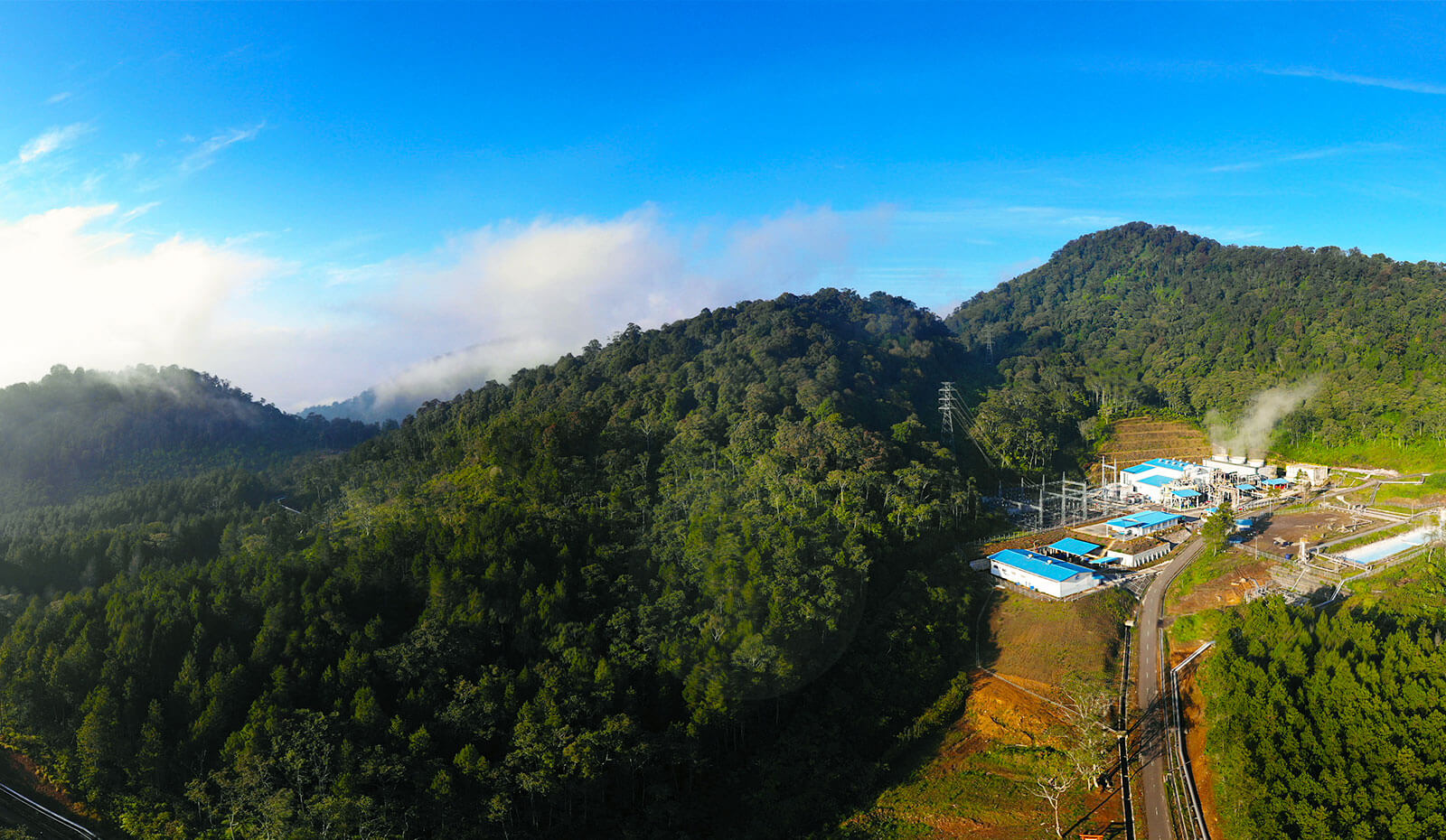
PT Pertamina Geothermal Energy Tbk (PGE) is committed to carrying out all operational projects, including new developments, with an emphasis on transparency, community participation, and social and environmental sustainability. PGE conducts public consultations during the early stages of each project. The public consultation process aims to provide an understanding of planned operational activities, explain potential social, economic, and environmental impacts that may arise from these operations, and outline the corresponding mitigation efforts.
PGE involves village officials, community leaders, and local organizations to attend information sessions that explain various aspects of the planned activities, such as the Environmental Impact Assessment (AMDAL) and the Environmental Management and Monitoring Efforts (UKL-UPL) related to the project.
PGE conducts initial socialization and community consultation from the early stages of the project through meetings with village governments, community leaders, and local organizations to secure social license, explain aspects of the Environmental Impact Assessment (AMDAL) and Environmental Management and Monitoring Efforts (UKL-UPL). This process is conducted in a transparent and participatory manner to ensure that the community understands how environmental and social impacts are managed and has opportunities to raise questions, express concerns, and provide suggestions or feedback.
To identify potential issues early on, prevent conflicts, and gather community input as a consideration in decision-making, PGE ensures that consultations and communications with stakeholders are conducted transparently in accordance with PGE's internal procedures with a frequency of at least once every year during the operational phase. To improve information access and minimize communication barriers, PGE delivers project-related information through socialization and consultation forums that enable the community to convey questions, complaints, and feedback directly.
As a manifestation of transparency and ongoing commitment, the implementation of consultations and communications with the community over the past two years has been realized through various strategic activities. In 2024, activities included FGDs and community consultations at PGE Area Kamojang, Karaha, and Lumut Balai, as well as well-drilling project socialization and well production test socialization in PGE operational areas. Meanwhile, in 2025, community consultation activities were expanded and carried out at PGE Area Kamojang, Ulubelu, Lahendong, Lumut Balai, and Karaha.
Program CSR
1. Geothermal Dry House
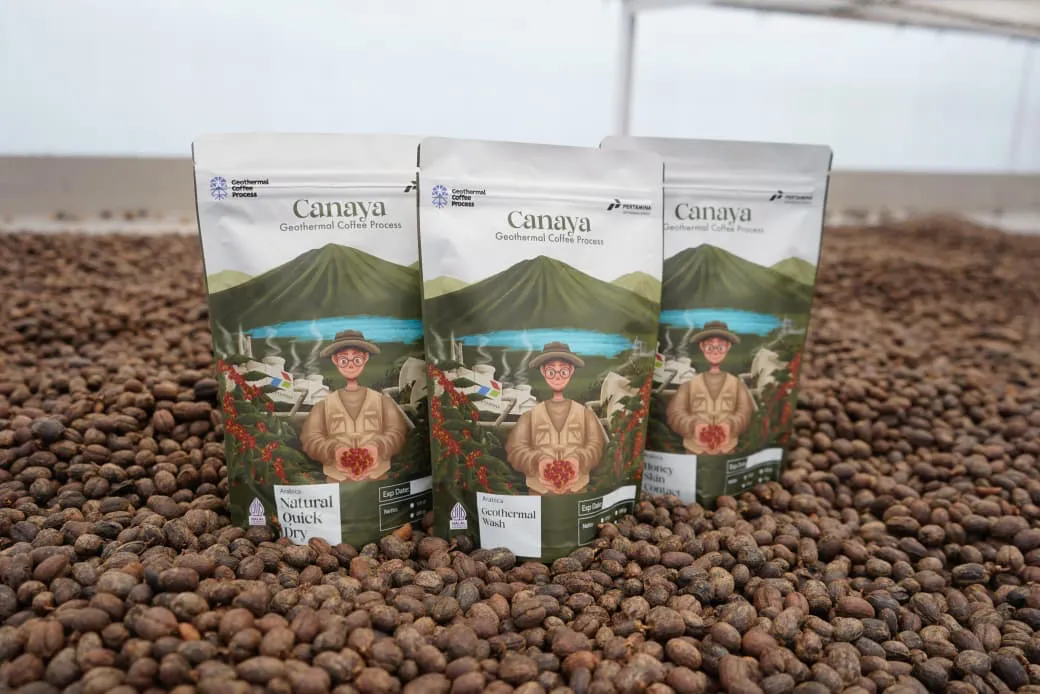
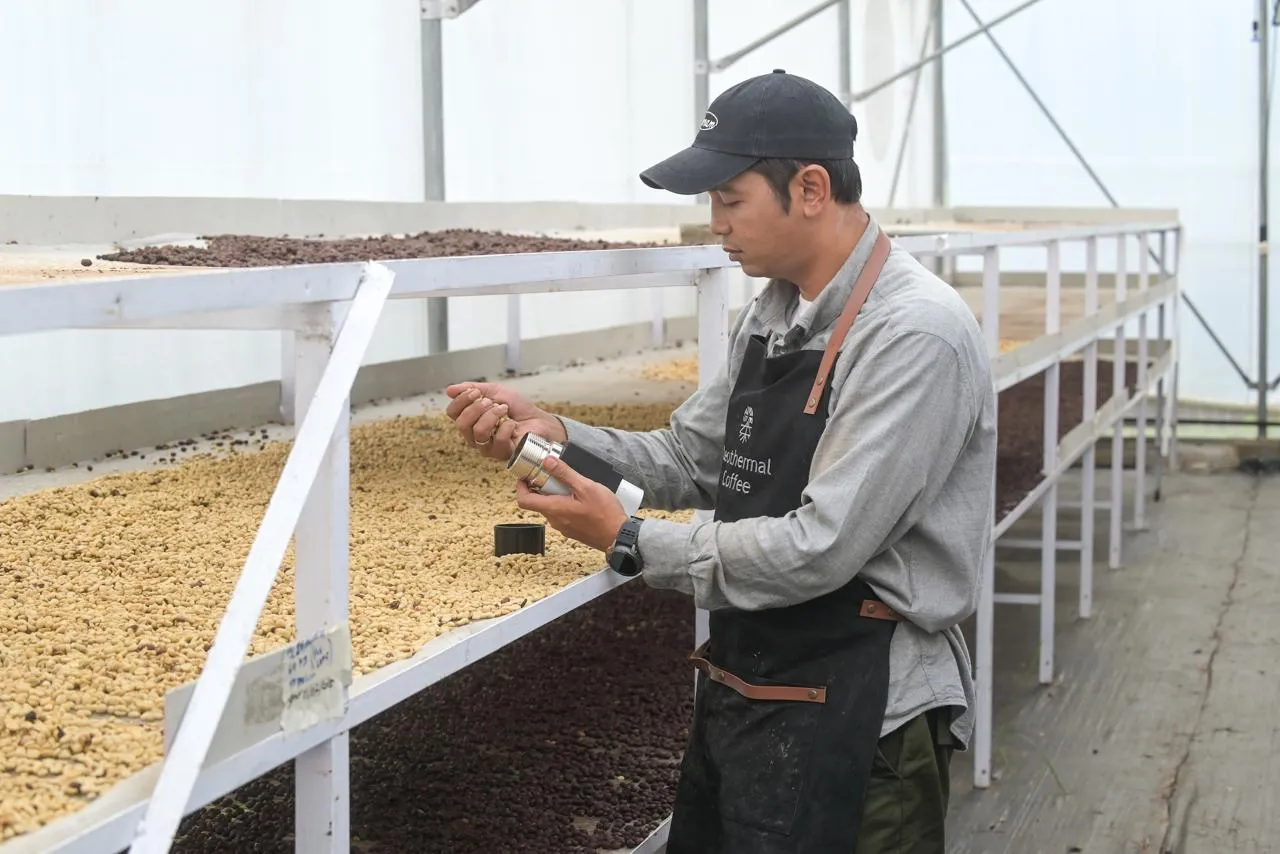
Geothermal Dry House is an innovative coffee-drying facility powered by geothermal energy that utilizes geothermal steam through a direct-use geothermal approach. By utilizing steam that would otherwise condense and be discharged through a steam trap, this technology enables a more stable drying process in terms of temperature and humidity. The conventional coffee-drying process, which typically takes around 30–45 days, can be shortened to just 2–10 days.
This innovation helps coffee farmers overcome weather-related challenges during post-harvest processing while improving product quality, production efficiency, and business sustainability. To date, Geothermal Dry House has benefited 312 local coffee farmers and supported the development of coffee products for export markets. The use of geothermal energy in this program also contributes to carbon emission reductions.
2. GeO - Fert
GeO-Fert is an innovative organic fertilizer drying system that utilizes excess geothermal steam as an energy source to dry fertilizer produced through the fermentation of organic waste. This technology enables the drying process to be completed in approximately 12 hours, regardless of weather conditions. Through a more efficient process, GeO-Fert supports the supply of quality organic fertilizer for agricultural needs.
By utilizing geothermal energy and processing organic waste, GeO-Fert promotes more sustainable and circular agricultural practices. The program has reached 306 community members across 25 groups and generated economic and environmental benefits, including reduced carbon emissions. This initiative is part of PGE’s efforts to develop geothermal applications that create added value for communities surrounding its operational areas.
3. Geothermal Dehydrator
Geothermal Dehydrator is an innovative food-drying system that uses excess geothermal steam as its primary heat source. The technology is designed to deliver a faster, more hygienic, and more consistent drying process compared with conventional methods that rely on sunlight. The use of geothermal energy helps improve the efficiency of agricultural product processing while maintaining food quality.
The program supports the empowerment of women farmers through the participation of 56 members from three Women Farmers Groups (Kelompok Wanita Tani or KWT). In addition to improving production efficiency, Geothermal Dehydrator encourages the development of community-based food businesses powered by renewable energy. This initiative demonstrates how geothermal energy can help strengthen local livelihoods and support the sustainability of the local food industry.
4. Geothermal Greenhouse
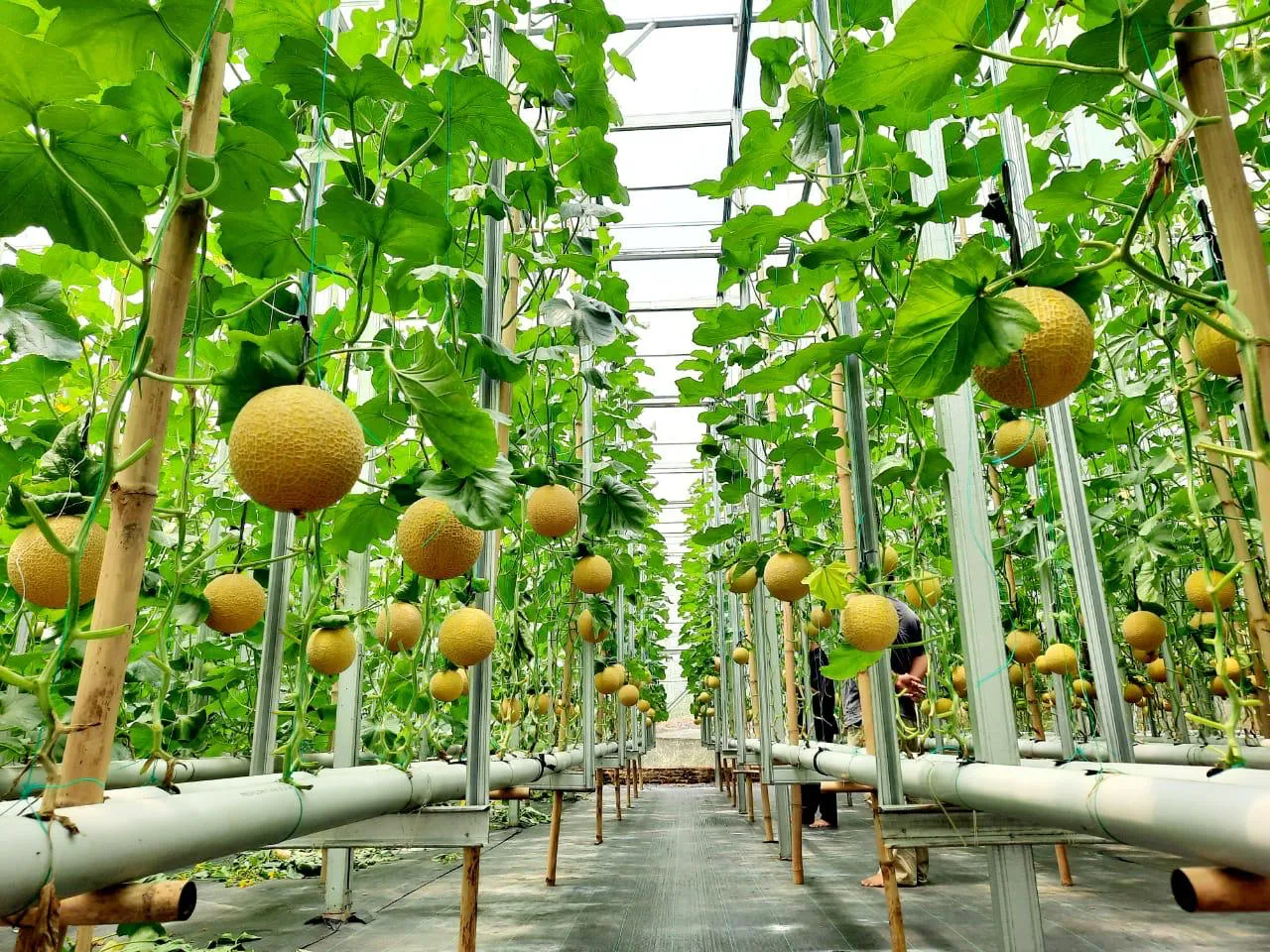
Geothermal Greenhouse is an innovative melon cultivation system that combines geothermal and solar energy in a greenhouse. Geothermal energy is used to automatically regulate the temperature inside the greenhouse, while a solar power plant supplies the electricity required for operations. This combination of technologies helps create more optimal growing conditions for melon plants.
The implementation of Geothermal Greenhouse supports increased productivity and crop quality while strengthening the sustainability of renewable energy-based agricultural businesses. The program generates approximately IDR 100 million in melon sales annually and provides indirect benefits to 783 people. Through this innovation, PGE promotes the use of clean energy to support productive and economically valuable agricultural development.
5. Pupuk Booster Katrili
Pupuk Booster Katrili is an innovative fertilizer made from silica deposits derived from geothermal fluids. The program was developed to address local farmers’ limited access to chemical fertilizers while promoting more sustainable management of geothermal by-products. By processing materials generated through geothermal operations, PGE encourages the development of agricultural products with added value.
The development of Pupuk Booster Katrili helps improve fertilizer cost efficiency and benefits local communities, including farmers living near PGE’s operational areas. The program has generated annual fertilizer cost savings of IDR 240 million and reached 1,755 indirect beneficiaries. The initiative is also being further developed toward commercialization and downstream agricultural product development, with the potential to expand the economic benefits derived from geothermal resources.
6. Ciclo Lab
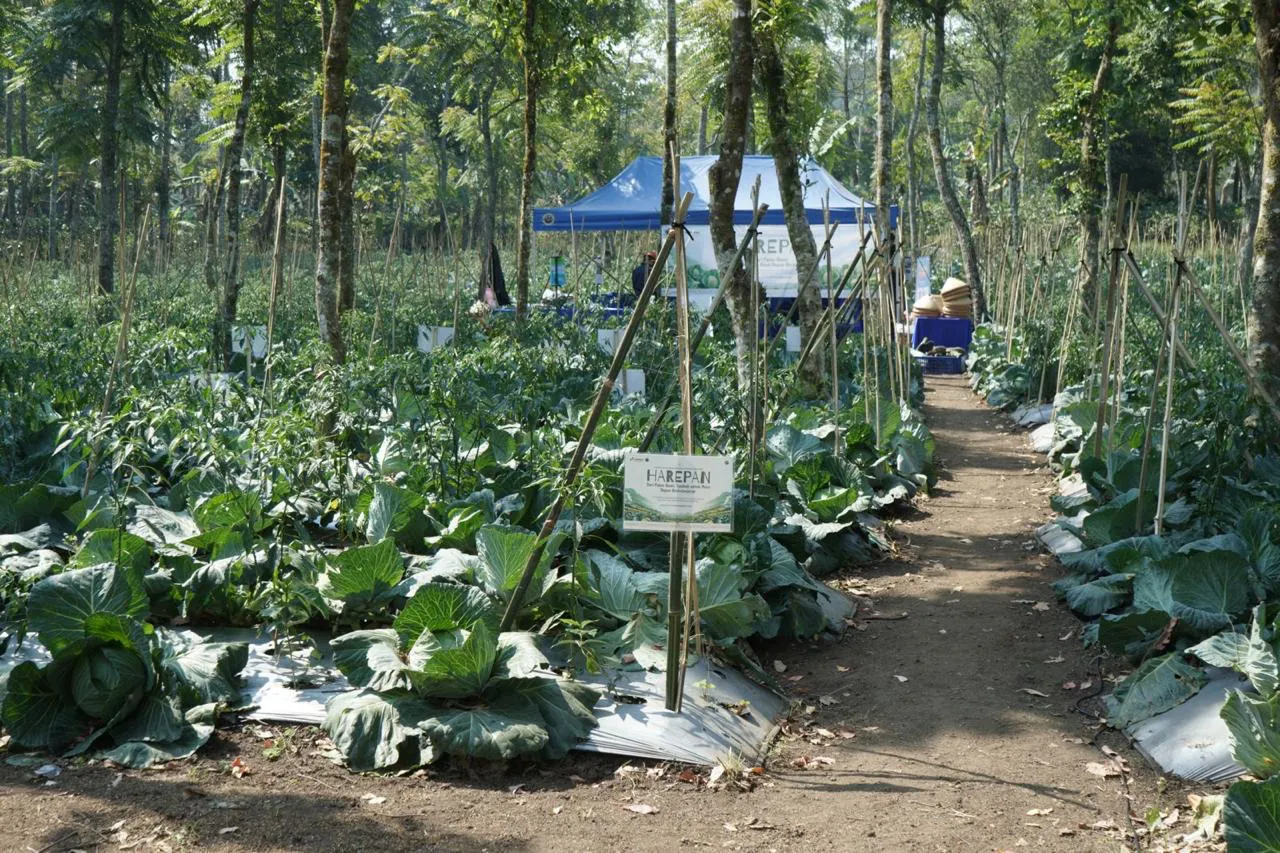
Ciclo Lab is a social innovation program that transforms organic waste into value-added products, such as Black Soldier Fly (BSF) larvae and organic fertilizer. The program addresses the challenges of corporate waste management while creating opportunities to strengthen community economic capacity through more efficient resource utilization. It is implemented in collaboration with community groups to promote more sustainable waste management practices.
Through a circular economy approach, Ciclo Lab helps reduce waste generation while creating opportunities to increase community group incomes. The program has recorded an increase in group income of IDR 6.82 million and provided indirect benefits to 1,467 people. In addition, Ciclo Lab helps strengthen community capacity in circular economy management, enabling the program to generate social, economic, and environmental benefits.
7. Pupuk COMBINE
Pupuk COMBINE (Compost Brine) is an innovative mineral-rich organic fertilizer that utilizes geothermal brine and locally sourced organic materials, such as wild grass, coffee husks, and sheep manure. Developed in collaboration with the Faculty of Agriculture at Siliwangi University and three assisted farmer groups, the program combines geothermal resource utilization with organic material processing to produce fertilizer that supports agricultural needs.
Pupuk COMBINE was developed to help address limited access to fertilizer, high production costs, dependence on chemical fertilizers, and declining soil quality. The program has reached 58 farmers, including 15 young farmers, and generated fertilizer cost savings of IDR 17.4 million for the 58 farmers per planting season. Its use has also contributed to an average 21% increase in red chili pepper productivity, while supporting more sustainable agricultural practices through the utilization of local materials.
8. Kamojang Eagle Conservation Center (PKEK)
The Kamojang Eagle Conservation Center (Pusat Konservasi Elang Kamojang or PKEK) is a conservation program established in 2014 through a collaboration between PGE, the West Java Natural Resources Conservation Agency (BBKSDA), and Raptor Indonesia. Located in Kamojang, West Java, PKEK focuses on the rescue, rehabilitation, research, and release of raptors, particularly the Javan hawk-eagle (Nisaetus bartelsi), an endemic Indonesian species that inspired the Garuda, Indonesia’s national emblem. To support these efforts, PGE has allocated approximately 116 hectares within the Kamojang Geothermal Working Area as a conservation site, equipped with rehabilitation facilities and flight-training areas to prepare eagles for their return to their natural habitats.
Over more than a decade, PKEK has undertaken conservation efforts for 392 eagles and successfully released 153 of them back into their natural habitats. The program also promotes environmental education for students and communities and involves local residents, including through the provision of eagle feed by local livestock farmers. These sustained efforts have contributed to PKEK receiving the 2026 National Nature Conservation Day (HKAN) Award in the Species and Genetic Conservation category from the Ministry of Forestry. This initiative reflects PGE’s commitment to aligning geothermal energy development with ecosystem and biodiversity protection.
9. Yaki Monkey Conservation
Yaki Monkey Conservation (Macaca nigra) is an initiative by PGE’s Lahendong Area in North Sulawesi to protect an endemic Sulawesi species classified as Critically Endangered (CR) on the IUCN Red List. In collaboration with the Masarang Foundation, PGE supports the conservation of nine individual yaki monkeys through a habituation process in Rurukan Forest before their release into the wild. This method takes into account the geographical, climatic, and environmental conditions of the monkeys’ original habitat to help them adapt more effectively before returning to the wild.
These conservation efforts are also carried out through the Lestari Manimpang: Dengan “Mapalus” Torang Lestarikan dan Lindungi Monyet Yaki program, which encourages community participation in protecting the species and its habitat. PGE collaborates with local community groups, including in the provision of feed to support the program’s continuity. Through this collaboration, PGE promotes community-based biodiversity protection while strengthening environmental conservation efforts in areas surrounding its operations.
PGE provides a customer complaint handling mechanism through the following channels:
- Pertamina Contact Center 135 (PCC 135)
- The Company’s customer email channel PGE
- Contact Coordinator
- Operator Control Room
All complaints received are recorded in the Customer Complaint Log Book and forwarded to the Backroom Team for further analysis. Throughout this process, customers are notified periodically that their complaints have been received and are kept informed of the handling progress until the complaints are resolved.
Complaints are classified into three categories based on their severity and the level of authority required for resolution: minor, which can be handled internally by the Area Geothermal team and resolved by the Manager of Operations or Manager of Maintenance within a maximum of 1 × 24 hours; moderate, which requires the involvement of the General Manager and/or VP of Operations & Engineering, with a resolution target of up to six months; and important/serious/major, which requires the involvement of the Board of Directors or Director of Operations, with a resolution period exceeding six months. Once a complaint is resolved, the outcome is communicated to the customer, and the complaint is recorded as closed in the Customer Complaint Log Book.