
Labor Practices
Workforce Breakdown
PGE manages its workforce composition through data maintained by the Human Capital Function, with due consideration to the principles of gender equality and equal opportunities for all employees. In practice, PGE is committed to fostering an inclusive working environment that provides women and men with equal opportunities to contribute, develop, and pursue career advancement across various roles and organizational levels. This approach is applied across PGE’s entire workforce.
The 2025 workforce gender diversity data are presented below:
Gender Diversity Indicator | Female Employees | Total Employees | Percentage |
|---|---|---|---|
Share of women in total workforce | 71 | 561 | 12.66% |
Share of women across assistant manager (and equivalent), manager, and VP positions | 38 | 561 | 6.77% |
Share of women in assistant manager and equivalent positions | 26 | 561 | 4.63% |
Share of women in manager positions | 6 | 561 | 1.07% |
Share of women in Vice President (VP) positions | 6 | 561 | 1.07% |
Share of women in management positions in revenue-generating functions | 4 | 45 | 8.89% |
Share of women in STEM-related positions | 25 | 542 | 4.61% |
Gender Pay Indicators
PGE applies the principle of gender equality in its Human Capital management, including by providing equal opportunities and equitable treatment to male and female employees in terms of remuneration. Remuneration is determined based on objective, job-related factors, including position level, tenure, performance, and competencies.
The pay equality analysis covers a comparison of remuneration between male and female employees by employee level and relevant remuneration components, including base salary and other cash incentives. PGE also assesses gender pay differences based on both mean and median values, including the gender pay gap and bonus gap.
Description | Difference between Men and Women Employees (%) |
|---|---|
Mean Gender Pay Gap | -16.97 |
Median Gender Pay Gap | -31.15 |
Mean Bonus Gap | -20.93 |
Median Bonus Gap | -34.92 |
PGE measures gender pay and bonus gaps by comparing the remuneration of male and female employees using mean and median values. The Mean Gender Pay Gap is calculated based on the difference between the average pay of male and female employees relative to the average pay of female employees. Meanwhile, the Median Gender Pay Gap uses the median pay of each group. PGE measures the Mean Bonus Gap and Median Bonus Gap using the same approach by comparing the mean and median bonuses received by male and female employees. Negative values indicate that, based on the applied formula, the remuneration or bonuses of male employees are lower than those of female employees. For example, a Mean Gender Pay Gap of -16.97% indicates that the average remuneration of female employees is 16.97% higher.
However, PGE applies the same remuneration principles to male and female employees, with no difference in remuneration based on gender. Differences in aggregate remuneration are influenced by objective factors, such as home company, tenure, length of time in the position, KPI achievement, position level, work location, and applicable regional allowances.
Hiring
Description | 2022 | 2023 | 2024 | 2025 |
Total number of new employee hires | 21 | 8 | 15 | 38 |
Percentage of open positions filled by internal candidates (internal hires) | 44.74% | 93.75% | 77.94% | 70.99% |
PGE manages its workforce requirements through a combination of recruitment and employee mobility, both within PGE and across Pertamina Group entities. The data presented as “internal hires” does not solely represent vacancies that were opened and subsequently filled through internal recruitment, but rather reflects employee movements, including promotions, transfers or movements of employees from other entities within the Pertamina Group, as well as the filling of new positions by employees already within the Pertamina ecosystem. In addition to internal mobility, PGE also conducts external hiring to fill vacant positions within PGE in support of the Company’s long-term strategy in accordance with its Long-Term Corporate Plan (RJPP).
Voluntary Employee Turnover Rate
Description | 2022 | 2023 | 2024 | 2025 |
Tingkat turnover pekerja sukarela (%) Voluntary employee turnover rate (%) | 0.4 | 0.8 | 0 | 0.2 |
The Voluntary Employee Turnover Rate represents the percentage of employees who voluntarily leave the Company during the reporting period, calculated based on the number of employees who resign relative to the total workforce, in accordance with the calculation methodology applied. This indicator reflects the Company's Voluntary Employee Turnover Rate during the reporting period.
Human Capital Return on Investment
PGE calculates Human Capital Return on Investment (HC ROI) to measures the level of profitability generated in relation to PGE's total employee-related expenses. Total employee-related expenses include salaries and benefits, as well as human capital development costs incurred by PGE.
The decrease in HC ROI compared with the previous year is in line with the increase in employee-related expenses to fulfill positions required to support PGE's growth targets under its Long-Term Corporate Plan (RJPP), including the acceleration of installed capacity expansion. These increased costs support project development, while the revenue contribution from such projects has not yet been fully realized. The impact on HC ROI is expected to be reflected more optimally over the longer term as the projects reach Commercial Operation Date (COD) and begin contributing to the Company's performance.
PGE's HC ROI calculation for 2022–2025 is presented below:
Description | 2022 | 2023 | 2024 | 2025 |
Total Revenue (in USD thousand) | 386,068 | 406,288 | 407,120 | 432,726 |
Total Operating Expenses (in USD thousand) | 185,009 | 184,503 | 196,392 | 230,346 |
Total Employee-Related Expenses (in USD thousand) | 43,870 | 34,397 | 41,363 | 63,270 |
Resulting HC ROI | 5.58 | 7.45 | 6.09 | 4.20 |
Human Capital Development
Employee Development Programs
Description | 2022 | 2023 | 2024 | 2025 |
Average training hours per FTE | 275 | 17 | 67 | 73 |
Average training expenditure per FTE | Rp3,577,046 | Rp8,618,544 | Rp6,082,217 | Rp10,883,910 |
Note:
FTE (Full-Time Equivalent) is a standardized unit of measurement representing the equivalent of one full-time employee based on the total working hours during the reporting period.
Training programs cover four categories: leadership/managerial, technical/functional, general, and study assignments, delivered through both in-person and online formats. All training programs cover PGE’s full-time employees (FTEs) as part of the Company’s commitment to providing equitable opportunities for employee development.
Diversity, Equity, Inclusion, and Cultural Programs
PT Pertamina Geothermal Energy Tbk (PGE) reaffirms its strong commitment to diversity, equity, and inclusion in the workplace.
Throughout 2025, PGE implemented several initiatives relevant to cultural education and raising awareness of cultural diversity and inclusion, including:
- E-Learning - Building Inclusive Workplaces, to enhance employees’ understanding of the importance of building an inclusive workplace that respects diversity (accessible at all times by employees at all levels).
- E-Learning - Preventing Workplace Harassment & Discrimination, to increase employees’ awareness of preventing harassment and discrimination and promoting respectful behavior (accessible at all times by employees at all levels).
- Mobile Learning - Respectful Workplace, to enhance employees’ understanding of appropriate behavior and build a respectful workplace (accessible at all times by employees at all levels).
- Talkshow and Sharing Session – DEI and Mental Health Awareness, conducted once and targeting employees at all levels to enhance their understanding of Diversity, Equity, and Inclusion (DEI), including the importance of respecting different perspectives and fostering a supportive work environment.
- Building Inclusive Workplaces: Knowledge Sharing & G-PERFORM Kick-Off, a one-time workshop for employees at all levels to strengthen understanding of inclusivity and diversity, supported by the year-round G-PERFORM program.
The implementation of these programs is based on the Diversity & Inclusion Policy
guidelines, Learning TKO, and PGE Human Capital Manager KPI (ESG Learning). PGE also implements the Agent of
Change (AoC) program by appointing designated personnel to socialize and promote the integration of AKHLAK
cultural values across the workplace. The performance of AoC is evaluated against established targets, with
awards presented to those demonstrating outstanding performance.
Through the Diversity and
Inclusiveness Policy and Respectful Workplace & Human Rights Policy, the Company explicitly prohibits
discrimination, violence, and harassment, while emphasizing respect for human rights across all aspects of
employment. These policies are also accompanied by strict consequences for employees who violate them, thereby
fostering a safe, inclusive, and respectful workplace culture. These policies refer to global standards,
including ILO Conventions, thereby providing international legitimacy to the commitments undertaken.
In
addition to policies and training, PGE provides opportunities to strengthen employee solidarity and professional
networks through affinity groups. One of PGE’s affinity groups is Pertiwi, which has established programs to
support women employees in expanding their professional networks through the Coaching & Mentoring Program.
The forum serves as a platform for sharing experiences, building confidence, fostering cross-functional
collaboration, reducing organizational silos, and strengthening women’s roles within the organization.
The
Pertiwi Coaching & Mentoring Program engages managers and senior leaders as mentors who provide guidance to
female employees at the Assistant Manager level and below. The mentoring approach combines one-on-one and group
sessions, focusing on achieving the participants’ career development goals. The benefits of the program are
reflected in three key areas:
- EEnhanced Individual Capabilities: Employees are equipped with stronger
leadership, communication, and problem-solving skills.
- Strengthened Self-Confidence: The mentoring process supports female employees in building greater confidence to take on strategic roles in the future.
- Increased Learning Hours and Professional Networking: The program expands learning opportunities while providing access to cross-functional networks, enabling participants to broaden their professional connections and accelerate their career development.
PGE consistently implements inclusive recruitment policies that provide employment opportunities for persons with disabilities while upholding the principles of non-discrimination regardless of gender identity, religion, or socioeconomic background.
Ensure the effectiveness of diversity implementation
is carried out through key performance indicators (KPIs) and the Human Capital Function Monthly Report submitted
to PGE Management, covering indicators such as the talent pool for critical positions, turnover rate, and
training. These data are reviewed quarterly through the Performance Dialogue forum and reported in the
Sustainability Report. In addition, PGE conducts an annual employee satisfaction survey, with the results
reviewed on a yearly basis.
Performance Evaluation & Feedback Culture
PGE has a Performance Management System (PMS) that applies to all permanent employees. The PMS regulates the full cycle, starting from the preparation of Individual Goals (IGs), monitoring of performance realization, provision of 360° feedback, and annual evaluations conducted through Dialog Day sessions between supervisors and employees. In addition, performance evaluations are used as the basis for talent planning, including talent pool identification, compensation adjustments, and participation in the Performance Improvement Program (PIP) for employees with lower performance. With this approach, PGE not only strengthens administrative compliance, but also builds a sustainable career development ecosystem, oriented toward a high-performance culture.
To support long-term business growth, PGE also conducts manpower planning to ensure the availability of talent to support the Company’s business growth. PGE continues to strengthen employee competencies through continuous learning programs, leadership development, and workplace culture transformation to build an adaptive and competent workforce that is well prepared to support the acceleration of the energy transition.
To support a healthy work culture, PGE implements formal mechanisms to build a culture of open feedback, through Dialogues Day conducted at least once a year. In addition, PGE runs a culture program called Personal Talk Activities, which requires all functions to hold one-on-one sessions between supervisors and employees at least twice a month. This practice enhances two-way communication between management and employees, and fosters a more inclusive and collaborative working environment.
Employee Support Programs
PGE provides various programs and facilities to support employee well-being and help employees balance their work and personal responsibilities. These measures include childcare facilities, lactation rooms, flexible working arrangements, and paid leave for family and caregiving needs.
1. Childcare Facilities
Through Pertamina (Holding), PGE supports the provision of daycare facilities through Pertiwi for children of Pertamina employees. The service is available for children aged 3–11 months and 1–5 years and provides professional caregivers, safe and comfortable facilities, and activities that support children's development.
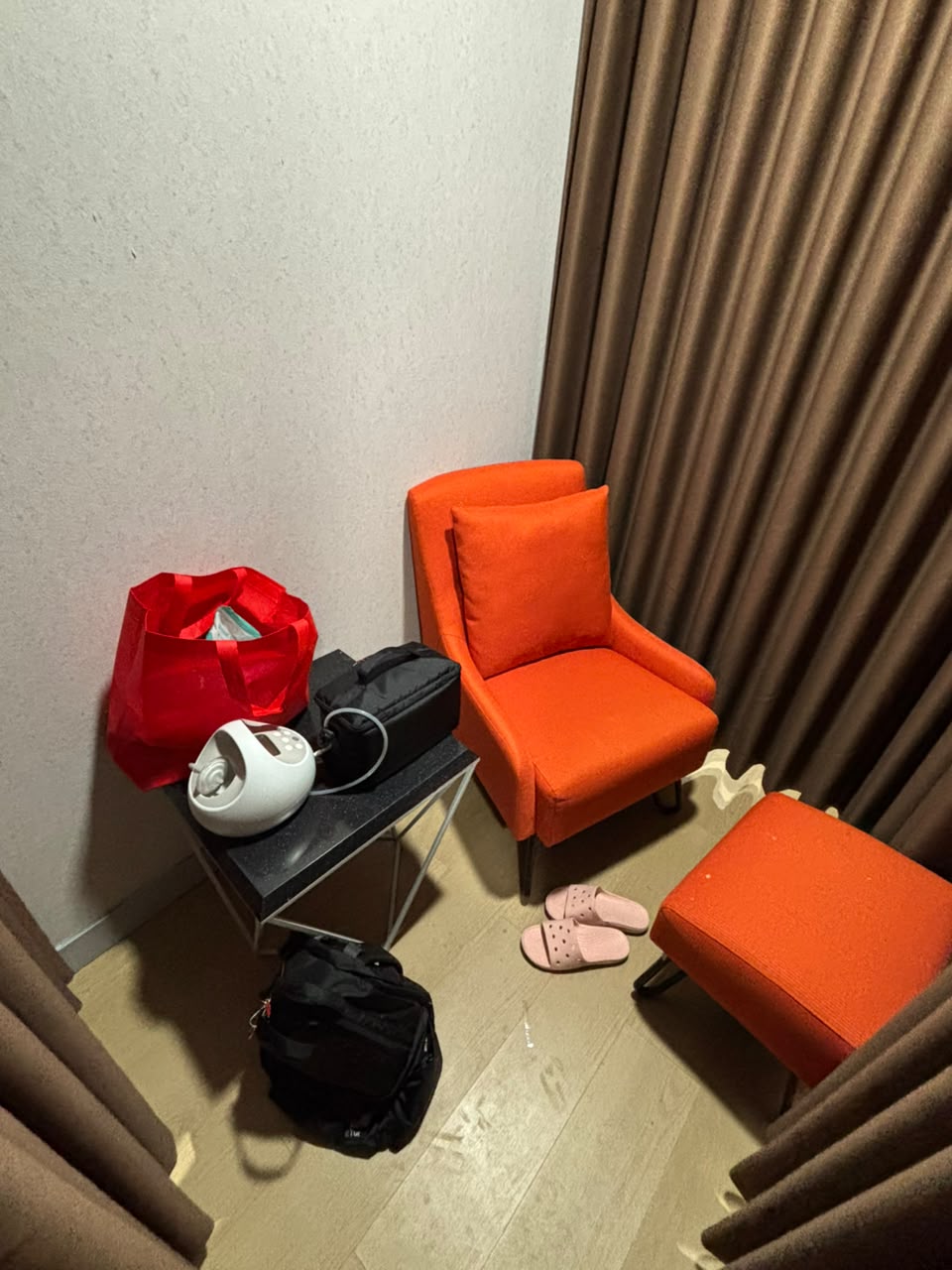
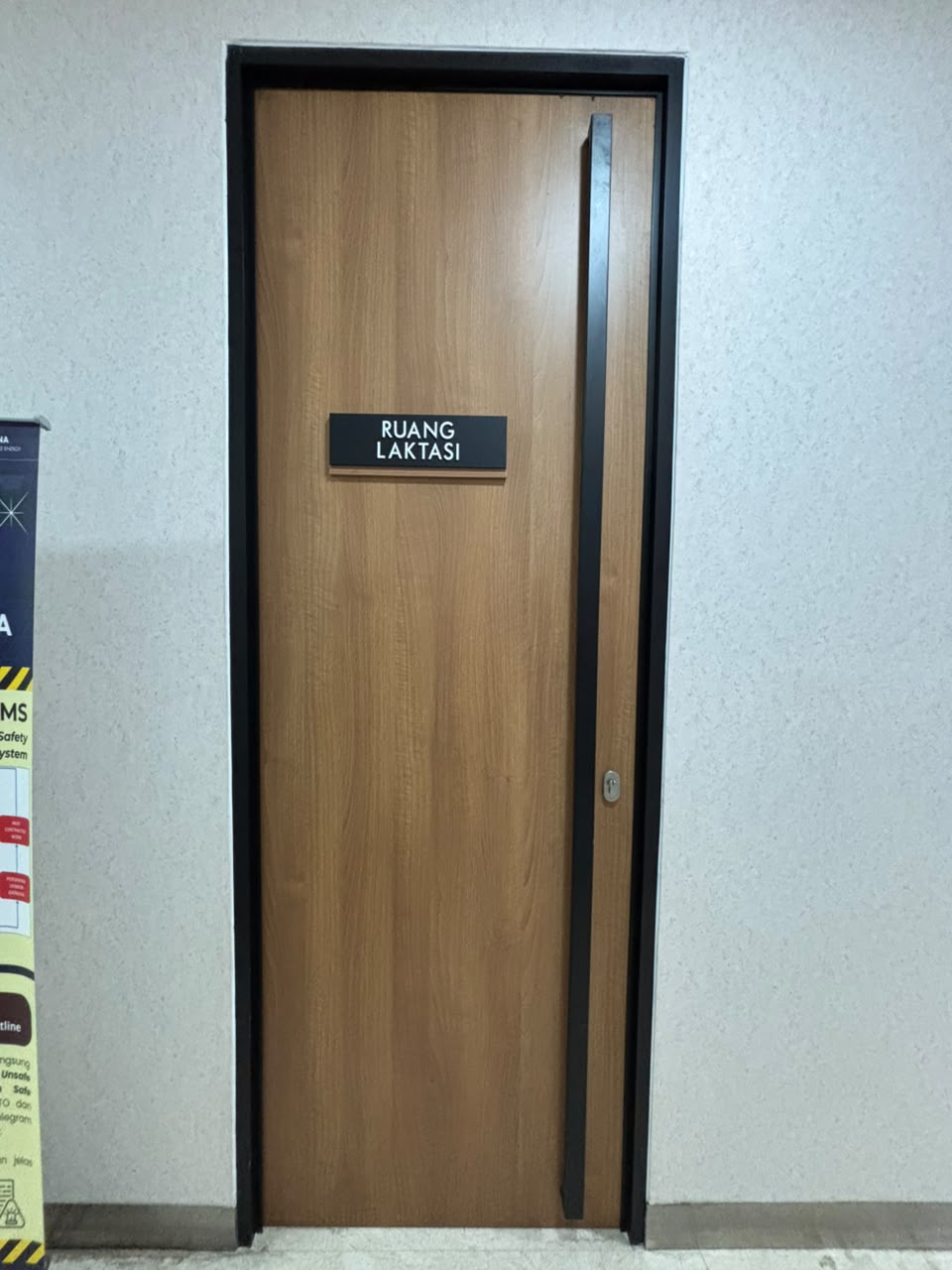
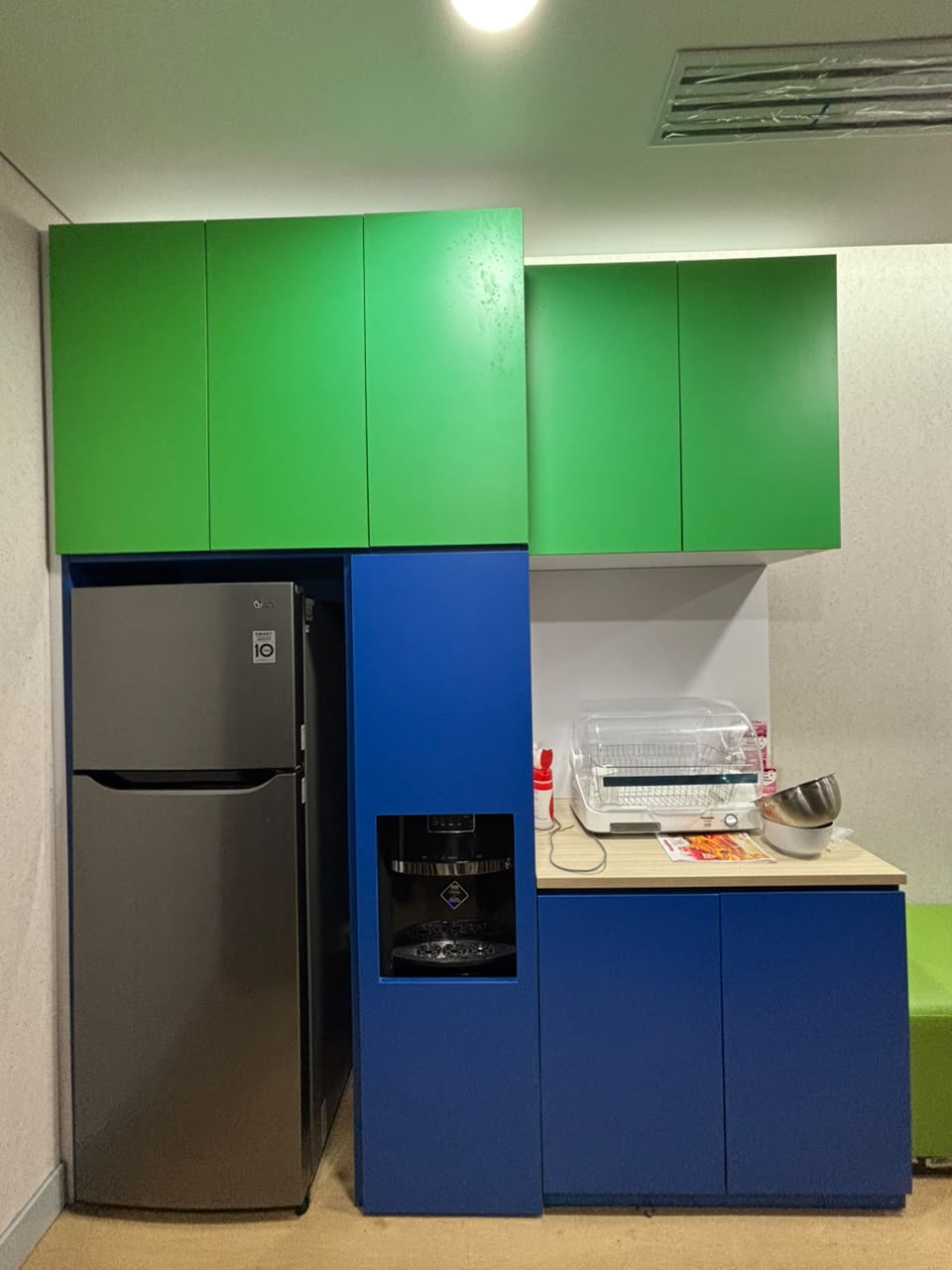
2. Lactation Rooms
PGE provides lactation rooms to support female employees to balance their work and childcare responsibilities. The facilities provide a proper, clean, safe, and private space.
3. Paid Family and Care Leave
PGE provides paid leave and time off for various family and personal needs as stipulated in the PGE Collective Labor Agreement (PKB) 2024–2025. These provisions include leave for employees getting married, leave when an employee's wife gives birth or experiences a miscarriage, and leave in the event of the death of a family member. Female employees are also entitled to 1.5 months of leave before childbirth and 1.5 months of leave after childbirth, in accordance with applicable provisions and medical recommendations. Similar provisions apply to female employees who experience a miscarriage.
4. Flexible Working Hours
PGE applies a flexible working hours scheme, with normal working hours from 07.00 to 16.00, Monday to Friday. Workers who start after 07.00 are required to extend their finishing time accordingly, so that total working hours remain 8 hours per day, excluding rest time. In accordance with the Manpower Law and the Collective Labor Agreement (PKB), PGE also applies working hours of 8 hours per day or 40 hours per week, along with rest periods. Overtime is limited to a maximum of 3 hours per day or 13 hours per week, with compensation provided for hours worked beyond normal working hours, so that no one is compelled to work excessively.
Trend of Employee Wellbeing
PGE conducts surveys among all employees to monitor levels of employee engagement and satisfaction as part of its evaluation of working conditions and employees’ workplace experience. The survey covers three main areas, consisting of Employee Engagement, Employee Satisfaction, and Psychological Wellbeing. The Psychological Wellbeing assessment categorizes employees’ levels of psychological well-being into three categories, Low, Medium, and High. The target score based on KPIs for Employee Engagement and Employee Satisfaction in 2025 was 3.9.
PGE’s employee survey covers several aspects related to employee experience and well-being, including job satisfaction, the purpose and meaningfulness of work (purpose), psychological well-being related to happiness in the workplace (happiness), and employees’ psychological conditions related to work-related stress (stress).
The survey results will subsequently serve as an evaluation basis for PGE to determine priorities for enhancing its Human Capital programs in the following year.
In addition, the Psychological Wellbeing assessment conducted in 2025 showed that 52.5% of employees were classified as having High Psychological Wellbeing, while 26.3% were classified as Medium and 21.2% as Low. PGE uses these results as one of the inputs to identify employees' wellbeing conditions, which will subsequently be followed up with appropriate treatment and preventive measures.
| Core Focus / Survey Type | 2025 |
|---|---|
| Employee Engagement | 4.56 |
| Employee Satisfaction | 4.35 |
| Employee Wellbeing | 52,5% (High) |
Collective Bargaining Agreements (CBA)
The Company respects employees’ rights to freedom of association and collective bargaining and is committed to fostering harmonious industrial relations. In 2025, a total of 98.41% of the Company’s employees are covered by Collective Bargaining Agreements (CBAs), which set out various provisions concerning employment relationships, employee rights and responsibilities, as well as employment terms and conditions. This coverage demonstrates that the vast majority of the Company’s employees are protected and covered through collective bargaining arrangements.
Description | Unit | 2022 | 2023 | 2024 | 2025 |
Percentage of employees represented by an independent trade union or covered by collective bargaining agreements | Percentage | 84.18 | 88.6 | 83.7 | 98.41 |