

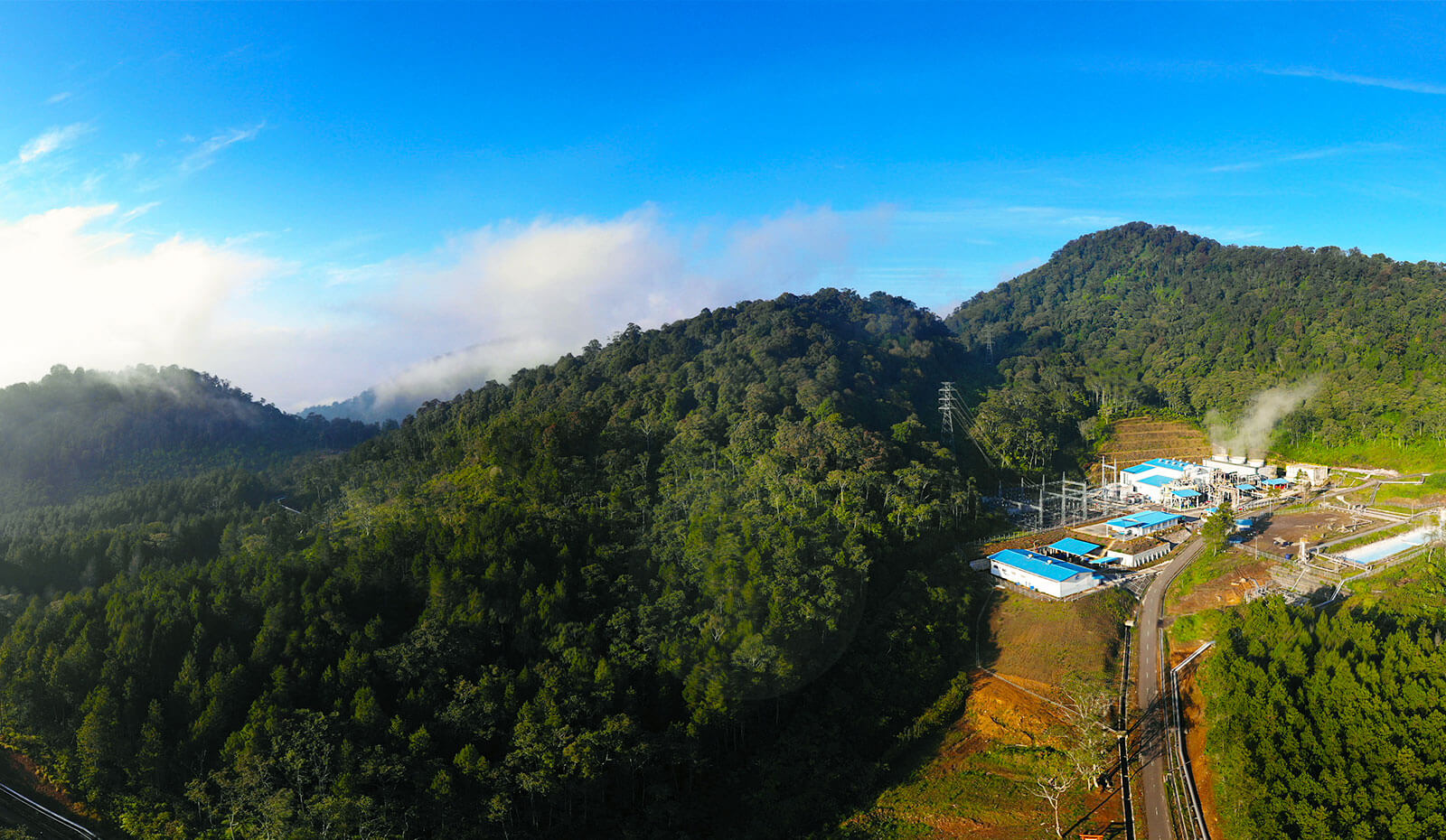
Geothermal Power Generation
As one of the geothermal energy developers in the world, PGE operates renewable energy power generation facilities that serve as the core foundation of the Company's low-carbon business portfolio. Throughout 2025, PGE recorded a solid operational performance with total power generation reaching 5,095.49 GWh across core areas such as Kamojang, Lahendong, Ulubelu, Karaha, and Lumut Balai (including the commencement of operations for the 55 MW Lumut Balai Unit 2 PLTP). This achievement reinforces PGE’s strategic role as a reliable and sustainable backbone of clean energy supply, featuring an emission intensity 95.43% lower than fossil fuel-based power plants.
Green Innovation
As part of its long-term commitment to strengthening its low-carbon business portfolio, PT Pertamina Geothermal Energy Tbk (PGE) consistently allocates strategic investments in Research & Development (R&D) to drive sustainable, eco-friendly technological innovations. Through internal capability enhancement and close collaboration with academic institutions, research bodies, and global strategic partners, this R&D investment is focused on assessing, testing, and accelerating various future technological breakthroughs. This proactive approach ensures that every initiative and business development undertaken by PGE not only supports operational efficiency and the national energy transition, but is also consistently grounded in scientific excellence, comprehensive feasibility studies, and world-class corporate sustainability standards.
1. Green Hydrogen
PGE invests in research and development focused on clean hydrogen and green hydrogen technologies, specifically leveraging green electricity for the water hydrolysis process to produce H2 gas, as hydrogen is recognized as a highly potential eco-friendly energy source for the future. This initiative presents a strategic opportunity for PGE to expand its customer base into new industrial sectors beyond the power generation market. This research aligns with PGE's climate commitments and net-zero targets, as the supply of clean hydrogen produced will assist customers in transitioning from fossil fuels to more environmentally friendly energy sources. Furthermore, the average percentage share of total R&D investment planned over the next 5 years is assumed to remain constant based on the ongoing nature of the project, with actual figures subject to adjustment in accordance with project progress and operational development.
2. Binary Unit
PGE invests in research and development of Binary Unit technology to optimize the utilization of waste heat (brine) in the Ulubelu and Lahendong areas, which retain high energy content. This technology works by utilizing brine to vaporize a low-boiling-point organic working fluid, which is subsequently used to drive a turbine and generate additional electrical energy. This step effectively enhances energy efficiency and increases clean electricity generation capacity without requiring new well drilling, thereby directly contributing to the Company's climate targets through carbon emission reduction. In its implementation, PGE partners with PT Perusahaan Listrik Negara (Persero) / PLN as the primary off-taker and sole manager of the national power grid for administrative and contractual compliance, ensuring the optimal integration and delivery of this additional power supply into the national grid.
3. CO2 Liquicfaction
PGE invests in research and development focused on carbon liquefaction technology (CO₂ Liquefaction) to capture and process Non-Condensable Gas (NCG) emissions produced from geothermal operations. Technically, this liquefaction process significantly compresses CO₂ volume, facilitating storage and transportation while unlocking opportunities for liquid CO₂ utilization across other industrial sectors. This initiative aligns directly with PGE's climate targets to reduce direct greenhouse gas emissions (Scope 1). Nevertheless, given that commercial-scale CO₂ Liquefaction facilities and deployments are not yet available in Indonesia making economic feasibility studies challenging, PGE is currently concentrating on initial feasibility studies to assess its future commercialization potential.
4. Green Data Center
Our R&D investment in large-scale IT data center facilities powered by geothermal energy directly aligns with the company's climate commitments to reduce operational emissions, although it is currently in the basic academic and theoretical research phase. This exploratory research focuses on the technical and thermodynamic feasibility of utilizing independent geothermal energy to supply stable baseload electricity for PGE's internal operational data infrastructure and IT systems. By establishing this theoretical foundation early on, PGE strives to ensure that future digitalization and growing operational data processing needs of the company can be met efficiently and with minimal emissions.