

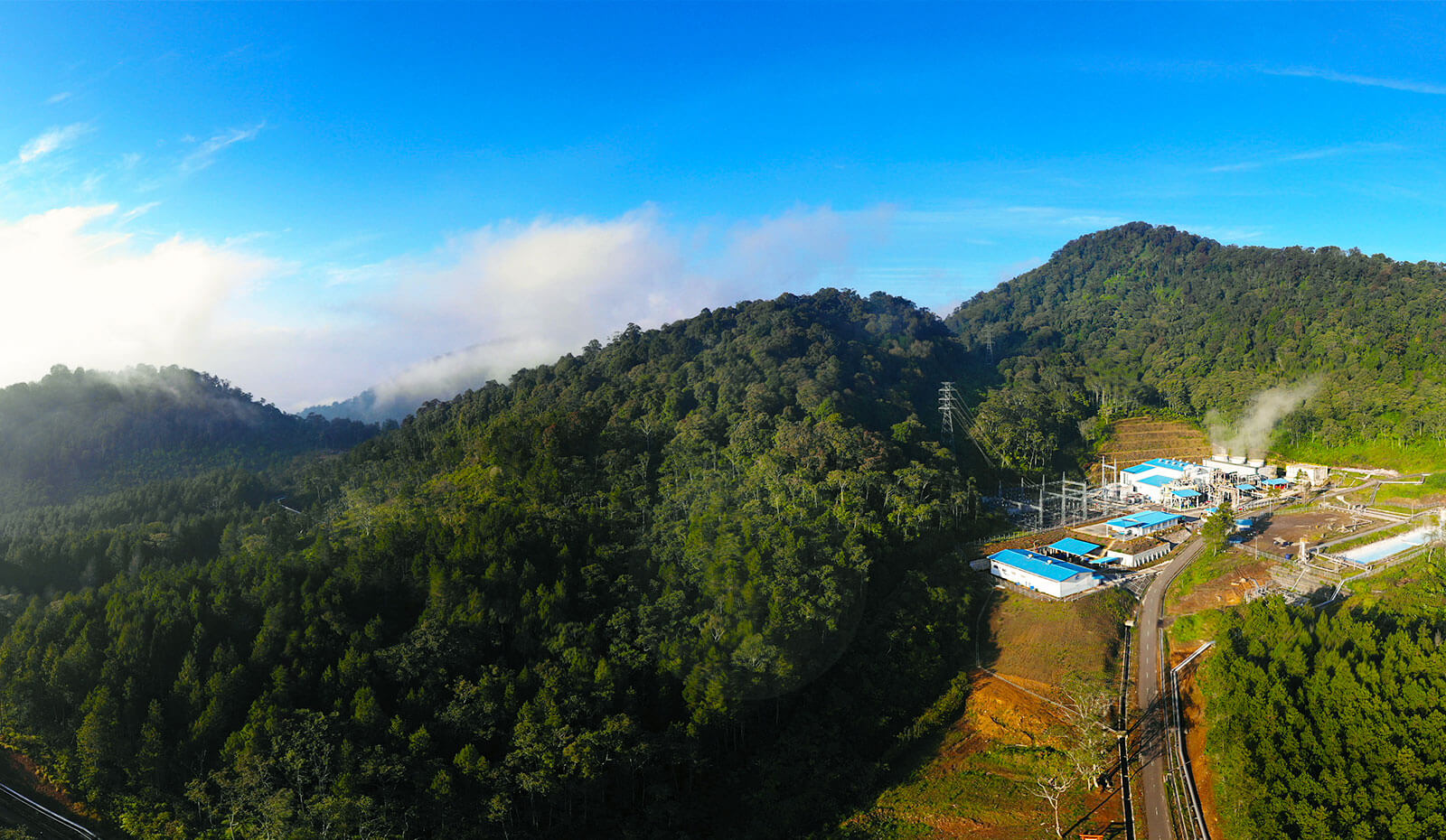
Climate Change Risk Management Strategy
PGE has conducted a climate scenario analysis using Representative Concentration Pathways (RCP), categorized into RCP 2.6, RCP 4.5, and RCP 8.5. Based on the results of the scenario analysis, 8 physical risks were identified:
1. Changing Rainfall Patterns
Risk Impact: Unpredictable rainfall patterns trigger landslides, floods, and droughts, which can adversely affect operational processes, including Engineering, Procurement, Construction, and Commissioning (EPCC). This may delay project completion and potentially increase operational costs.
2025 Initiatives
- Conducting monthly rainfall monitoring and climatology consultations in collaboration with the Meteorology, Climatology, and Geophysical Agency (BMKG).
- Performing bi-annual geohazard monitoring in landslide-prone areas.
- Monitoring the Early Warning System (EWS) for landslide hazards.
- Reinforcing slopes and maintaining drainage channels upon receiving red-flag alerts from the EWS.
2. Drought
Risk Impact: Impeding drilling operations due to a lack of water supply can lead to operational disruptions and project completion delays.
2025 Initiatives
- Scheduling drilling activities during the rainy season, particularly in the Karaha Area.
- Implementing water efficiency measures across operational activities.
- Conducting annual mapping of water-stressed areas using the Aqueduct Water Risk Atlas.
- Recording and monitoring water consumption.
- Executing annual water audits across Kamojang, Ulubelu, Lahendong, and Karaha Areas.
- Planting 13,435 trees within operational areas, critical land, and river basins.
3. Extreme Heat
Risk Impact: Reducing power plant efficiency due to diminished cooling system performance and lower turbine efficiency, increasing water and transmission pressures, and exacerbating drought conditions that heighten forest fire risks. This can disrupt operational systems, ultimately resulting in higher operating costs.
2025 Initiatives: Performing monthly maintenance and inspections of operational facilities and infrastructure.
4. Wildfires
Risk Impact: Posing damage risks to geothermal power plant (PLTP) facilities and properties in the area, which can disrupt overall operational processes. This condition may also harm the Company's reputation due to perceived environmental damage.
2025 Initiatives
- Preparing firefighting equipment and infrastructure, including fire trucks.
- Conducting community development programs oriented toward forest sustainability, such as the Margo Rukun Bestari Social Forestry program in Ulubelu.
- Carrying out forest patrols and security measures in collaboration with the Forestry Department and the Natural Resources Conservation Agency (BKSDA).
5. Floods
Risk Impact: Damaging infrastructure and disrupting communication networks as well as transportation within operational areas. This can lead to delays in material deliveries, disrupt field operations, and impact surrounding local communities.
2025 Initiatives
- Partnering with BMKG for weather information services and climatology consultations.
- Monitoring geohazards, particularly in flood-prone areas.
- Reinforcing slopes and maintaining drainage systems.
- Planting trees across operational areas, critical land, and river basins.
6. Windstorms
Risk Impact: Damaging infrastructure and disrupting communication traffic in and around operational areas. Additionally, fallen trees caused by strong winds can disrupt transport routes and pose safety hazards to workers.
2025 Initiatives
- Partnering with BMKG for weather information services and climatology consultations.
- Conducting routine maintenance of operational facilities and infrastructure.
7. Energy Market Competitiveness
Risk Impact: Limited production growth from renewable energy power plants and heavy reliance on PT PLN (Persero) as a single customer constrain the Company's revenue growth. Conversely, cost increases that are disproportionate to revenue growth risk eroding profit margins.
2025 Initiatives
- Actively participating through the Indonesian Geothermal Association (INAGA / APBI) as a Government partner in accelerating environmental and forestry permitting processes.
- Maintaining intensive communication with relevant agencies during land acquisition and permitting processes.
8. Partnership with Integrated Parent Company (Pertamina)
Risk Impact: Constrained capital allocation from Pertamina and limited access to markets and EBT-focused partnerships present distinct challenges. This is compounded by market positioning issues, where the Company risks being perceived as not yet fully aligned with current sustainability trends.
2025 Initiatives
- Achieving operational excellence in drilling activities, which represent a significant cost component of capital investment.
- Establishing vertical integration initiatives, such as the fabrication of heat exchangers as a key component of Organic Rankine Cycle (ORC) systems.
- Diversifying geothermal derivative products, such as utilizing geothermal electricity for off-grid applications, including the Ulubelu Green Hydrogen pilot project.
Climate Change Opportunity Management Strategy
In line with energy transition efforts and operational efficiency, PGE maps out climate-related potential opportunities along with their financial impacts and planned initiatives as follows:
1. Alternative Fuel for Drilling
Opportunity Impact: Replacing conventional diesel fuel with more environmentally friendly biodiesel in the drilling process.
2025 Initiative: 100% substitution with B35 fuel usage.
2. Alternative Fuel for Vehicles
Opportunity Impact: Replacing conventional vehicles with electric-based vehicles that have lower emission levels.
2025 Initiative: Substitution of operational vehicles with electric and hybrid vehicles.
3. Self-Generated Geothermal Power
Opportunity Impact: Replacing electricity from PLN with self-generated geothermal electricity reduces power reliance on PLN and lowers the Company's Scope 2 emissions.
2025 Initiative: Utilizing self-generated power from geothermal energy amounting to 168,122.41 MWh.
4. Natural Resource Efficiency
Opportunity Impact: Brine to Power technology, which generates electricity from geothermal fluid, can reduce electricity consumption from PLN.
2025 Initiative: Utilizing a 500 kW-scale geothermal power plant (PLTP) to power the Brine to Power reinjection pump.
5. Nature-Based Solutions
Opportunity Impact: By implementing nature-based solutions (NBS), PGE can utilize forest resources as carbon offsets to achieve Net Zero Emissions (NZE) by 2060.
2025 Initiative: Planting 13,435 trees.
Net Zero Emission Strategy Roadmap
PGE has established strategies and initiative milestones to achieve the Net Zero Emission (NZE) target through various roadmap phases:
2024–2026 (Emerge)
Target: 1 GW total installed capacity including existing Brine to Power technology.
Initiatives: Energy efficiency and co-generation initiatives targeting a >5% reduction in total Scope 1, 2, and 3 emission intensity for steam sales emissions by 2026.
2027–2030 (Transform)
Target: >1 GW total installed capacity from own production, achieved through exploration and co-generation.
Initiatives: Assurance of Scope 1, 2, and 3 emissions for steam sales with a target emission intensity reduction of up to 29% by 2030 through the application of electric power and geothermal technology.
2030–2060 (Sustain)
Target: >1 GW total installed capacity from own production, achieved through exploration and co-generation.
Initiatives: CO2 liquefaction, methanol development, and carbon capture development to achieve the NZE target by 2060.
Sustainable Financing
PGE has listed four strategic geothermal projects in the Ministry of National Development Planning/Bappenas Blue Book 2025–2029, with a total investment exceeding USD 1.09 billion.
List of Strategic Projects:
- Lumut Balai Unit 3 & Unit 4
- Gunung Tiga / Ulubelu Extension I
- Lahendong Unit 7-8 & Binary
Key Impacts & Targets:
- Additional Capacity: Projecting a potential addition of 215 MW of low-emission electricity.
- Operational Timeline: Planned to commence commercial operations in phases from 2029 to 2032.
- Financing Support: Potential to secure USD 613 million in foreign funding through an indicative concessional loan scheme from multilateral agencies.